Why Your DFW Home Always Feels Drafty — Even When the Thermostat Says Otherwise
It all begins with an idea.
If you live anywhere in DFW, you already know how wild the temperature swings can be. One day it’s 78°, the next day it’s 31°, and somehow your house always feels either too warm or too cold - never quite “just right.”
Most people assume it’s the HVAC system, but nine times out of ten, the issue starts above the ceiling.
Why Attics in North Texas Struggle
Homes in our area were built across several decades with very different insulation standards. Many older homes have:
Compacted or deteriorated insulation
Gaps around plumbing, electrical, or framing
Missing baffles or blocked soffits
Hot attics that hit 140°+ in the summer
Rodent-damaged insulation you’d never see unless you’re up there
When warm or cold air slips into the attic—or leaks out of your living space—you end up footing the bill.
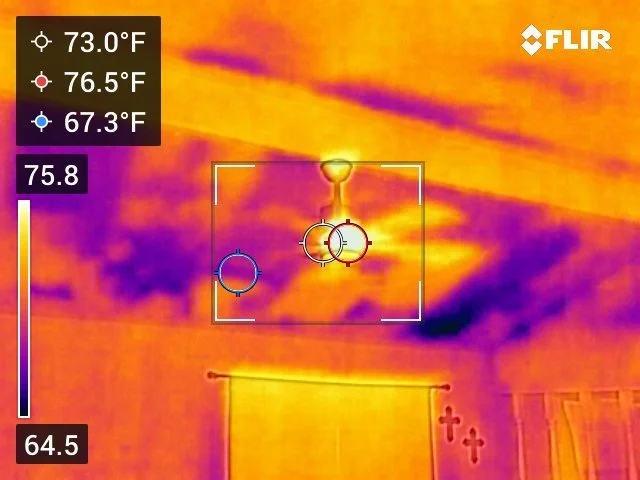
A Thermal Scan Tells the Real Story
We use thermal imaging to show homeowners exactly where temperature is escaping. And trust us: walls, ducts, attic hatches, and recessed lights leak a ton of air.
Once you see the image, it makes total sense why that one room is always freezing.
Fixing The Root Problem
A complete attic restoration solves the issue:
Remove old, ineffective insulation
Air-seal all those hidden gaps
Install baffles for proper airflow
Add high-density cellulose insulation
A few hours of work can change the comfort of your home immediately.
Thinking your house might be leaking air?
JayCo Insulation offers free attic assessments across DFW.
Cellulose vs. Fiberglass: Which Insulation Performs Better in North Texas Heat?
If you’ve lived in DFW for more than five minutes, you know: the heat here is different. And that heat loves to camp out in your attic—pushing temperatures to 130–150°F in July and August. That’s why insulation choice matters more here than in most parts of the country.
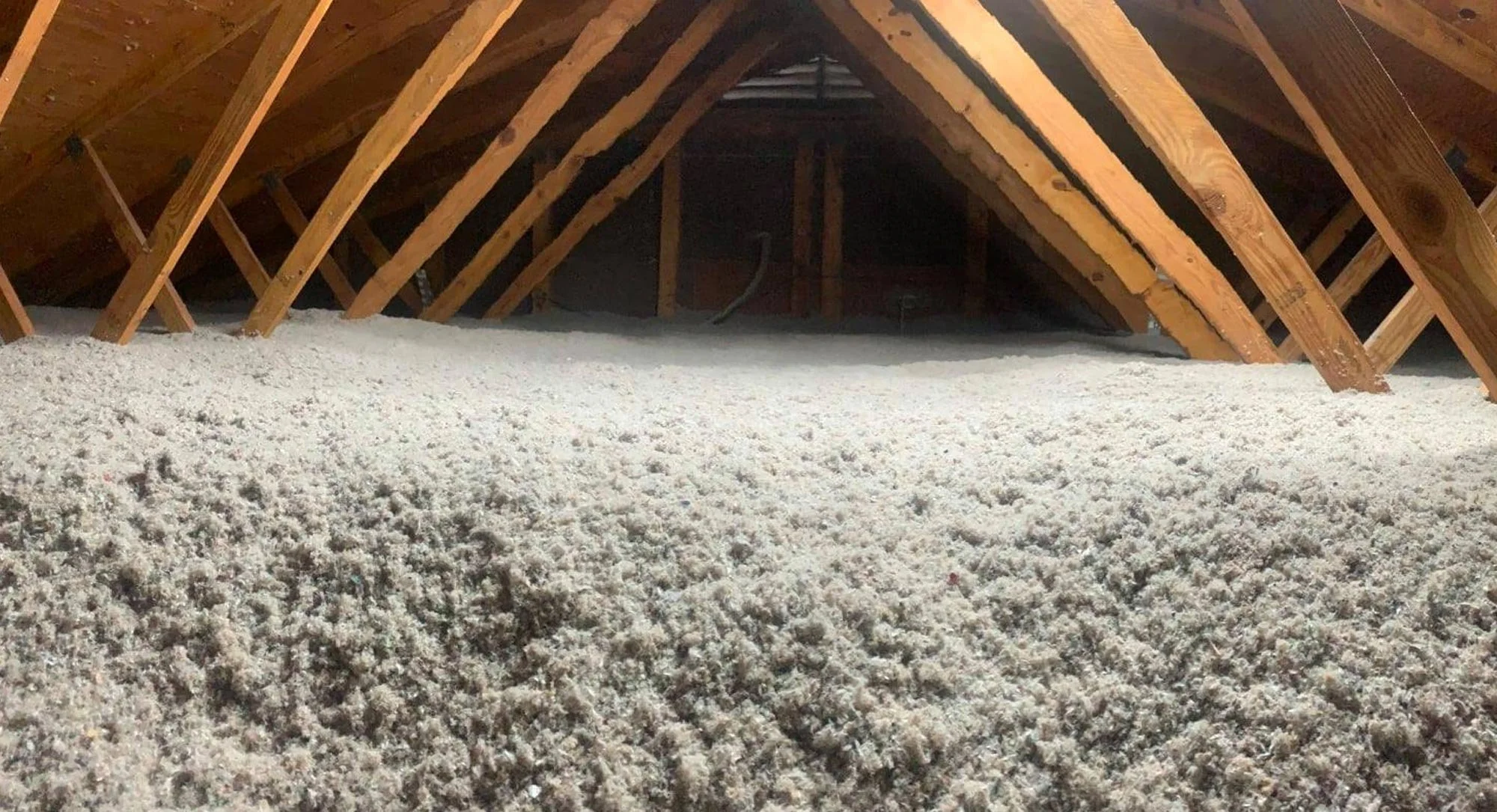
Fiberglass blown-in insulation is extremely common, but in real-world North Texas conditions, cellulose often performs better. Here’s why:
If you’ve lived in DFW for more than five minutes, you know: the heat here is different. And that heat loves to camp out in your attic—pushing temperatures to 130–150°F in July and August. That’s why insulation choice matters more here than in most parts of the country.
Fiberglass blown-in insulation is extremely common, but in real-world North Texas conditions, cellulose often performs better. Here’s why:
Cellulose Is Denser — and Density Matters in Texas Heat
Fiberglass blown-in insulation is light and airy. Great for quick installs, but not so great when your attic becomes a convection oven.
Cellulose is much denser, which means it allows less air movement, slows down heat transfer, and helps stabilize indoor temperatures. In DFW’s brutal summers, density equals performance.
Cellulose Fills Gaps More Completely Than Blown Fiberglass
Both products are blown-in, but they behave differently once installed.
Fiberglass blown-in insulation can leave small voids around wiring, framing, and tight corners. It can also form air channels where heat can move more easily, and it may become uneven if disturbed by airflow.
Cellulose, because of its smaller particles and higher density, naturally settles into cracks, crevices, and irregular spaces. It fills around obstructions better and creates a more consistent thermal blanket - exactly what you want in a hot climate.
Cellulose Performs Better During Extreme Heat
Fiberglass loses performance as attic temperatures rise because heat passes through the air pockets more easily. That’s not ideal when your attic is hotter than your grill.
Cellulose handles high temperatures better because it slows air movement, resists radiant heat gain more effectively, and reduces the “radiant oven” effect that pushes heat into your living space. This gives your AC a break - especially in peak summer.
Bonus: Cellulose Helps Reduce Noise
Because cellulose is denser, it also provides better sound control. It helps reduce outside noise, HVAC sounds, and general home echoes. Not the main goal, but a nice improvement.
Most DFW Attics Need More Than Just New Insulation
Insulation alone isn’t the finish line. Before adding new material, many attics in North Texas need attention underneath the surface.
Common issues include:
Air leaks around plumbing, wiring, and framing
Missing or crushed baffles
Ventilation imbalances
Compacted or contaminated old insulation
Rodent tunnels
Dust and debris buildup
That’s why JayCo Insulation performs a complete attic restoration before adding cellulose.
Our Attic Restoration Process Includes:
Full insulation removal
Attic sanitization
Air sealing
Baffle installation
High-density cellulose blown in to the proper depth
Your insulation only performs its best when the entire attic environment is corrected.
Final Thoughts
Fiberglass blown-in insulation isn’t “bad” - it’s just not the top performer in our extreme Texas heat. If you want more consistent comfort in both summer and winter, cellulose gives you a noticeable advantage.
JayCo Insulation offers free attic assessments across DFW if you want to see what’s happening above your ceiling.
Spray Foam vs. Blown-In Insulation: What Actually Makes Sense for North Texas Homes?
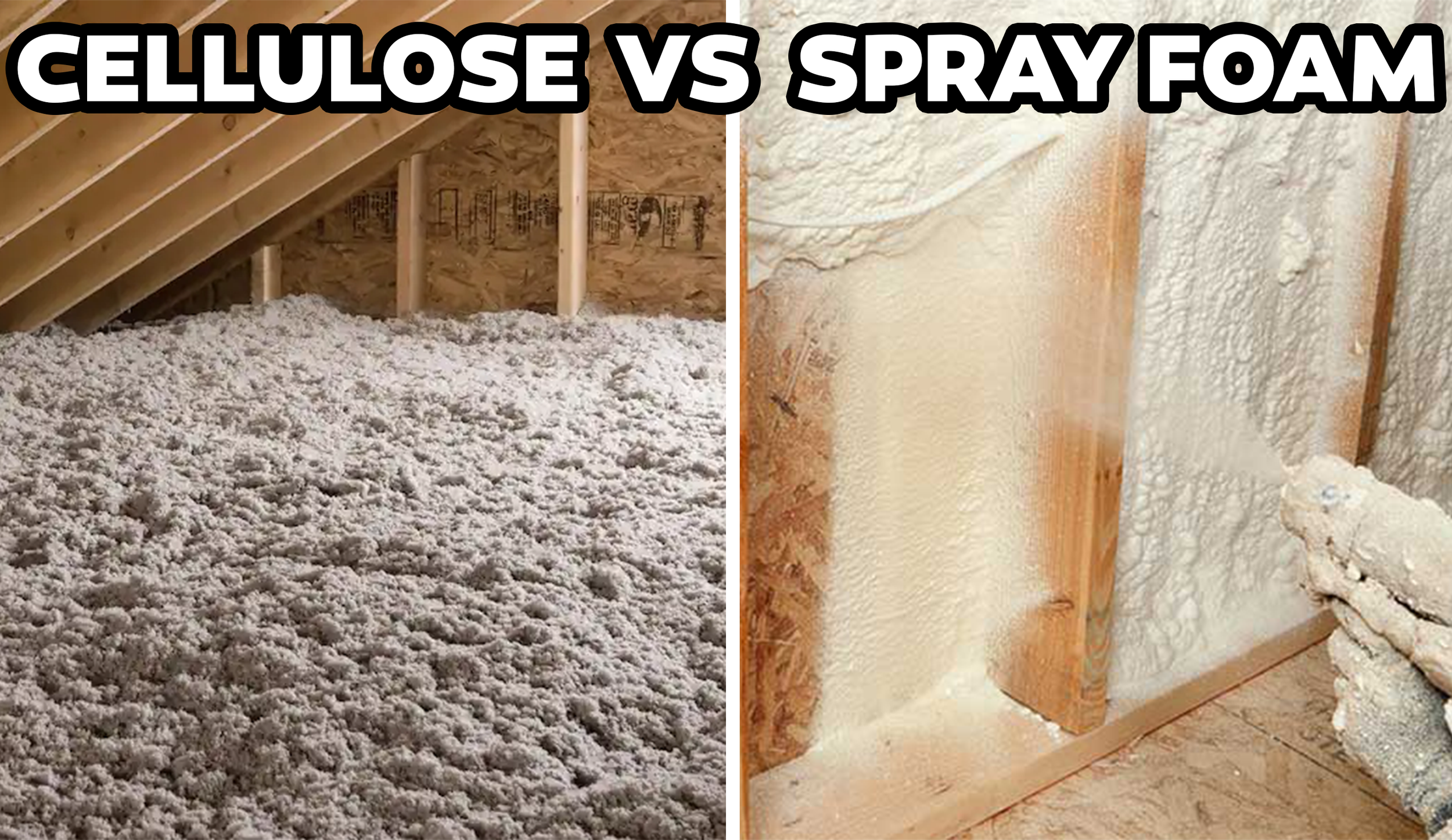
If you're researching insulation options, you’ve probably seen contractors pitch spray foam as the “ultimate solution.” And while spray foam does have its place, the truth is that in North Texas homes, it often introduces more problems than benefits.
If you're researching insulation options, you've probably seen contractors tout spray foam as the “best of the best.” It sounds impressive on paper - air sealing, moisture control, high R-values - but in real-world homes (especially here in DFW), spray foam creates more challenges than most homeowners realize.
Blown-in insulation, on the other hand, remains the most practical, cost-effective and homeowner-friendly option for typical attics in our climate.
Let’s break it down.
Roof Leak Detection: The #1 Reason Spray Foam Fails Homeowners
North Texas gets hit with:
Hail
High winds
Flash flooding
Roof damage from debris
Fast temperature swings that stress shingles and decking
Leaks are common here.
When your attic is spray-foamed, identifying a leak becomes extremely difficult because spray foam bonds directly to the roof decking. Water doesn’t drip down - it spreads sideways and hides between the foam and the decking.
Why that’s a huge problem:
Leaks go undetected for months or years
Decking rots behind the foam
Mold grows between the foam and wood
Roofers can’t properly inspect the structure
You often have to cut out large foam sections just to diagnose the issue
With blown-in insulation:
Leaks are obvious
Drip spots and stains show immediately
Damage is easy (and cheap) to repair
A visible leak is a fixable leak. A hidden leak is a structural disaster.
Spray Foam WILL Void Your Shingle Warranty
This is something insulation salespeople almost never mention.
Shingle manufacturers - including Owens Corning, Tamko, Atlas, IKO, GAF, Malarkey and CertainTeed - do NOT permit unvented roof decks unless strict conditions are met.
When spray foam is applied directly to the underside of the roof deck (especially closed-cell foam), it converts your attic into an unvented assembly. This changes how heat and moisture move through the roof system.
Why manufacturers reject this setup:
Roof temperatures can rise more than 15–20°F, shortening shingle life.
Moisture can get trapped in the decking with no way to escape.
Deck rot can occur undetected beneath the foam.
The roof system no longer performs the way it was engineered.
Most spray-foam retrofits do NOT include the additional materials, ventilation systems, or code-required details needed for an approved unvented design.
Result:
Your shingle warranty - and sometimes even your roof system warranty - can be voided the moment spray foam is applied.
Roofers see this all the time:
A homeowner files a claim for premature shingle failure…only to learn the foam installer accidentally voided the warranty years earlier.
Blown-in insulation, installed on the attic floor, leaves your roof ventilation - and your warranty - completely intact.
Off-Gassing and Chemical Concerns
Spray foam is a two-part chemical mixture that must be mixed perfectly onsite. If the temperature, humidity, or ratio is off - which happens a lot - you get:
Chemical odors
Improper curing
Lingering fumes
Headaches or respiratory irritation
Entire homes needing remediation
Spray foam is not reversible. Once it’s in, it’s in - unless you pay a team thousands to scrape it off your roof deck.
Blown-in cellulose avoids all of this:
No harsh chemical reactions
No curing issues
Minimal odor
Safe to install in lived-in homes
Easy to remove, adjust, or top off later
Open-Cell vs. Closed-Cell Spray Foam (and Their Problems)
Open-Cell Spray Foam
Light and soft
Absorbs moisture
Can hold water like a sponge
Lower R-value
Expands aggressively
Can hide leaks while soaking them up
Closed-Cell Spray Foam
Higher R-value
Very rigid
Acts as a vapor barrier
Traps moisture between foam and decking
Nearly impossible to remove
Much more expensive
Neither type solves the fundamental needs of a DFW attic: Ventilation, leak visibility, reliable airflow, and balanced moisture control.
Why Converting an Unconditioned Attic Into a Conditioned Space Is NOT Simple
Spray foam contractors often pitch the idea of “turning your attic into conditioned space.” Sounds fancy, right?
But here’s the truth: home design has to change dramatically to do this correctly, and almost no retrofit foam installation accounts for it.
What it actually takes to build a conditioned attic:
A) HVAC redesign
Your system must be sized, balanced, and ducted for a sealed attic. Most aren’t.
B) Mechanical ventilation
A sealed attic needs dedicated ventilation (ERV/HRV) to manage humidity. Most spray-foam retrofits omit this entirely.
C) Fire and ignition barriers
Codes often require thermal barriers or ignition barriers over exposed foam. Many installs skip or improperly apply them.
D) Moisture management
You must redesign how the home handles humidity, because a sealed attic traps moisture.
Improper installs often lead to:
Condensation
Mold
Damp roof decking
Humidity issues inside the home
E) Airflow redesign
Ridge vents, soffits, gable vents—all of it becomes “dead” once foam is applied. You must replace that airflow with mechanical systems.
F) Cost
A proper conditioned attic conversion requires:
Engineering
Mechanical redesign
Ventilation upgrades
New building science considerations
The average homeowner gets none of these - just foam sprayed on the deck.
That’s why so many homes with spray foam end up with unintended problems.
Repairability and Future Flexibility
This is where spray foam becomes a nightmare.
Spray foam makes future repairs difficult:
HVAC techs struggle working around it
Electricians often have to cut through it
Roofers can’t see decking conditions
Any attic upgrade becomes more expensive
Leak detection is almost impossible
Blown-in insulation wins here:
Easy to remove and reinstall
Allows full visibility of attic components
Flexible for future renovations or upgrades
No mess for contractors trying to access wiring or ducts
Homes evolve. Spray foam does not.
Real-World Performance in DFW
DFW experiences:
Long, intense summers
High humidity weeks
Quick temperature swings
Frequent roof replacements due to hail
In this environment, attics need:
Proper ventilation
Air sealing
Leak visibility
A thermal blanket that doesn’t trap moisture
Blown-in cellulose meets all these needs without altering the fundamental design of the home.
Spray foam tries to change the design- but without the accompanying mechanical systems or moisture management that true conditioned attics require. That mismatch causes problems.
So… When DOES Spray Foam Make Sense?
Spray foam works well in:
Barns
Workshops
Metal buildings
Shipping containers
Pole barns
Exterior walls in controlled new construction
But for residential attics in DFW?
Blown-in insulation + proper air sealing + correct ventilation is almost always the safer, smarter, and more cost-effective choice.
Final Thoughts
Spray foam isn’t inherently “bad”- it just isn’t the right solution for most North Texas homes.
Blown-in insulation provides:
Leak visibility
Safe installation
No off-gassing
Easier future repairs
Better adaptability
Strong performance in extreme heat
Balanced moisture behavior
JayCo Insulation specializes in full attic restoration, giving your home a clean, healthy foundation before installing high-quality blown-in insulation.
If you're considering insulation options, we’d be happy to take a look at your attic and walk through what makes the most sense for your home.