How Does Heat Move?
Heat moves in 3 ways: conduction, convection and radiation.
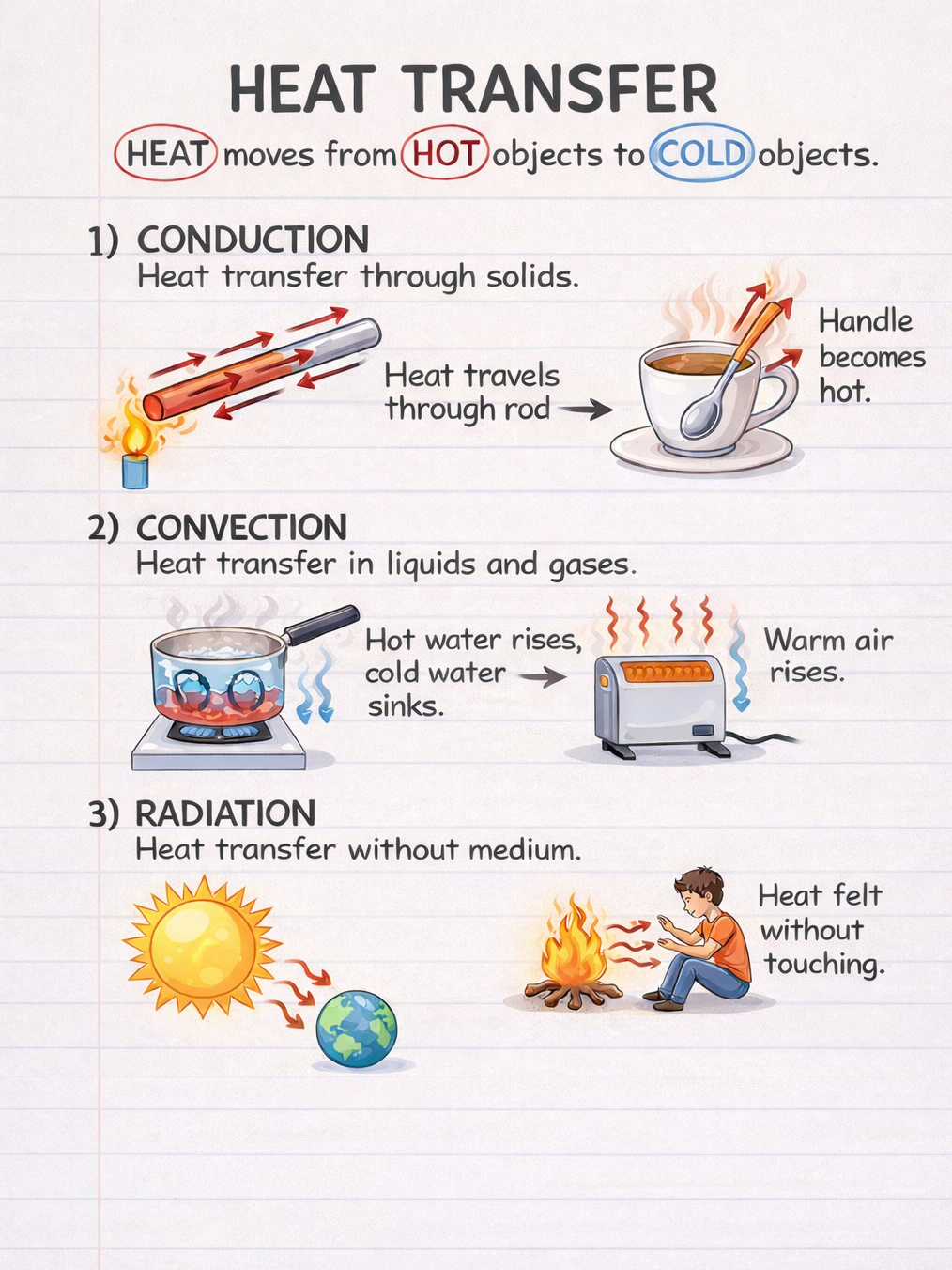
Conduction is heat transferring through solid objects.
Example:
When your attic reaches 150°F, that heat moves through:
• Roof decking
• Framing
• Drywall
• Insulation
It travels molecule to molecule through materials.
Insulation slows conduction by trapping tiny pockets of air that resist heat flow.
The higher the R-value, the more it resists conductive heat transfer.
But conduction is only part of the story.
Convection is heat moving because air moves.
Hot air rises.
Cool air sinks.
When air leaks exist in your attic floor, hot attic air can:
• Move through gaps in insulation
• Enter wiring penetrations
• Push into recessed lighting
• Flow through top plate gaps
That moving air carries heat with it.
This is why air sealing is critical.
Insulation alone does not stop air movement.
It only slows conductive heat.
If air is moving, heat is moving.
Radiation does not need air or solid material to move.
It travels in straight lines as infrared energy.
In the summer, your roof absorbs solar energy.
That energy radiates downward into the attic space.
Radiant heat can raise attic temperatures dramatically, even before air starts moving.
Radiant barriers help reduce this type of heat transfer by reflecting infrared energy.